
Quiz / session

Animal quiz: 20 questions with answers

What is the fastest land mammal? Which animal produces cube-shaped poop? This animal quiz brings together 20 questions on records and oddities from the animal world, from mammals and birds to fish, insects and reptiles. Every answer comes with a short explanation, checked against trusted sources such as museums, zoos and science agencies. Launch it in seconds: everyone votes on their phone and the leaderboard updates live.

Time including discussion:
15–20 min
For:
Families, teachers, game nights, teams and group leaders

English template · 20 questions · Updated on

Use this template

Make your own copy and edit it. Sign in or create an account to open it in the editor.

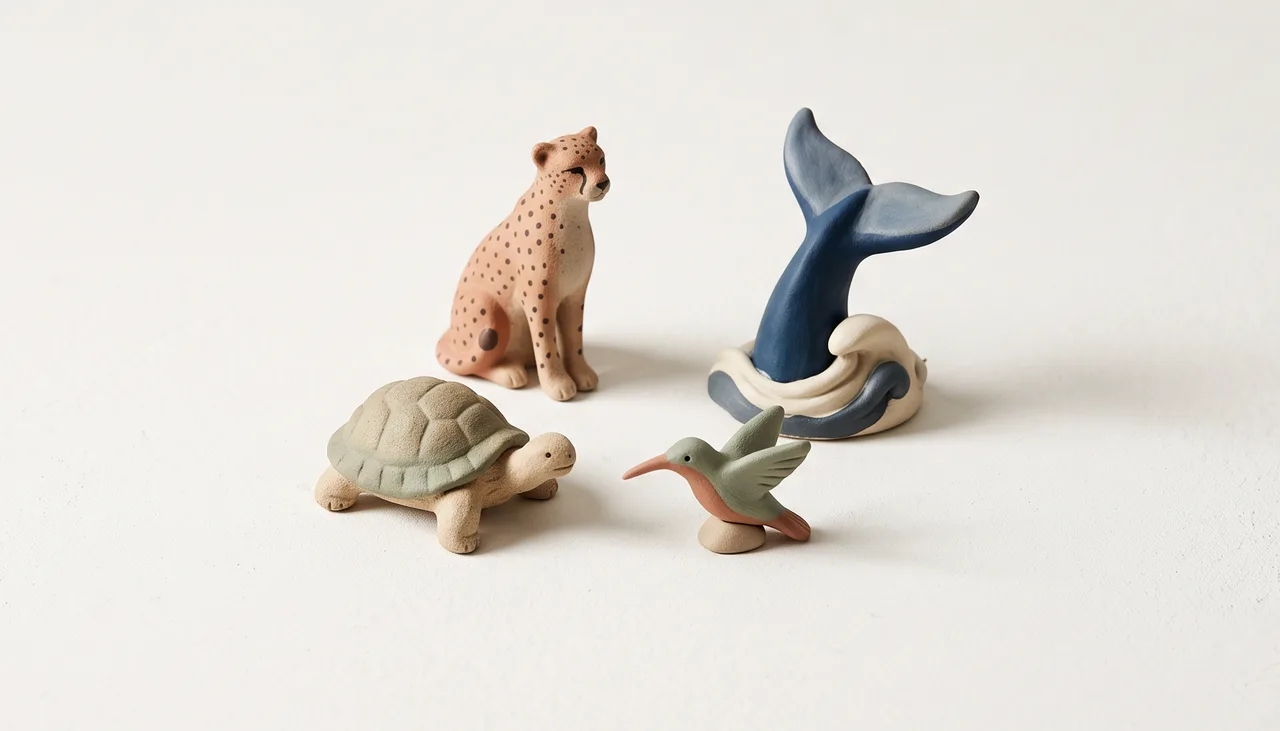
Cover illustration of the template “Animal quiz: records and oddities”
Question 1 of 20

What is the fastest land mammal?

What you can leave with

A quiz you can launch in a minute, packed with surprising facts that get everyone talking, with every answer backed by a trusted source.

All questions in this template

Open a question to see its answer, explanation and source. You can adapt the wording and order in the editor.

  1. 1. What is the fastest land mammal?
    • Lion
    • Cheetah
    • Gazelle
    • Horse

    Answer: Cheetah

    It hits 96–112 km/h (60–70 mph), but can only keep it up for about 270 meters. A full sprint usually lasts around 20 seconds.

    Source: Smithsonian’s National Zoo

  2. 2. What gives flamingos their pink color?
    • The sun
    • Salty water
    • Mud
    • Food

    Answer: Food

    The algae and tiny crustaceans they eat are rich in carotenoid pigments, similar to the ones that make carrots orange.

    Source: San Diego Zoo Wildlife Alliance

  3. 3. What is the largest animal known to have ever lived on Earth?
    • Blue whale
    • Woolly mammoth
    • Sperm whale
    • Whale shark

    Answer: Blue whale

    According to NOAA, it can reach about 33 meters (110 feet) and 150 tonnes (330,000 pounds). Its average lifespan is estimated at 80 to 90 years.

    Source: NOAA Fisheries

  4. 4. Among mosquitoes, only the females bite.

    Answer: True

    Females need blood to produce their eggs. Both males and females also feed on flower nectar and fruit juices.

    Source: US Centers for Disease Control and Prevention (CDC)

  5. 5. Which of these mammals lays eggs?
    • Bat
    • Pangolin
    • Platypus
    • Hedgehog

    Answer: Platypus

    Like echidnas, it is a monotreme. The female usually lays two eggs; once they hatch, she feeds her young with milk.

    Source: Australian Museum

  6. 6. Which bird has its nostrils at the very tip of its beak?
    • Kiwi
    • Toucan
    • Pelican
    • Heron

    Answer: Kiwi

    It’s the only bird like this. It sniffs out prey by probing the soil, and the female lays a huge egg: about 15% of her body weight.

    Source: Smithsonian’s National Zoo

  7. 7. A giraffe has more neck vertebrae than a human.

    Answer: False

    It has seven, just like us. But each one can be over 25 cm (10 inches) long! A newborn calf already stands about 1.8 meters (6 feet) tall.

    Source: San Diego Zoo Wildlife Alliance

  8. 8. In sea turtles, what decides whether a hatchling will be male or female?
    • Egg size
    • Moon phase
    • Mother’s age
    • Sand temperature

    Answer: Sand temperature

    Below 27.7 °C, the eggs produce males; above 31 °C, females. Temperatures in between give a mix of both.

    Source: NOAA Ocean Service

  9. 9. How many eyes does a honeybee have?
    • 2
    • 3
    • 5
    • 8

    Answer: 5

    Two large compound eyes on the sides, plus three small simple eyes, called ocelli, grouped on top of the head.

    Source: Frontiers in Neuroanatomy (2014), via PubMed Central

  10. 10. How far can an owl turn its head in either direction?
    • 360°
    • 270°
    • 180°
    • 90°

    Answer: 270°

    Its eyes are fixed in their sockets, so it must turn its whole head to look around. Special blood vessels keep blood flowing to its brain.

    Source: Johns Hopkins Medicine, 2013 study on owl head rotation (via ScienceDaily)

  11. 11. In seahorses, it’s the male that carries the eggs until the babies are born.

    Answer: True

    The female places her eggs in the male’s brood pouch. Two to four weeks later, he releases anywhere from a few dozen to about 1,000 young.

    Source: NOAA Ocean Service

  12. 12. What does the name “orangutan” mean in Malay?
    • Ape with long arms
    • Red-haired old man
    • Climber of trees
    • Person of the forest

    Answer: Person of the forest

    It’s the largest tree-dwelling mammal. Most evenings, it builds itself a fresh nest in the trees to sleep in.

    Source: Smithsonian’s National Zoo

  13. 13. Which bird covers about 70,000 km a year on average during its migration?
    • White stork
    • Arctic tern
    • Greylag goose
    • Barn swallow

    Answer: Arctic tern

    Tiny trackers followed these birds from Greenland and Iceland to the Southern Ocean off Antarctica, and back again.

    Source: Proceedings of the National Academy of Sciences (Egevang et al., 2010)

  14. 14. About how much does a red kangaroo weigh at birth?
    • 1 g
    • 50 g
    • 250 g
    • 1 kg

    Answer: 1 g

    After a gestation of about 33 days, the jellybean-sized newborn makes its way to the pouch, where it stays for nearly 8 months.

    Source: San Diego Zoo Wildlife Alliance Library

  15. 15. What is the largest living reptile?
    • Komodo dragon
    • Galápagos tortoise
    • Saltwater crocodile
    • American alligator

    Answer: Saltwater crocodile

    Adults are usually 3 to 5 m long; the biggest males exceed 6 m (20 ft). It ranges from India to northern Australia and can cross open ocean.

    Source: Australian Museum

  16. 16. Why do leafcutter ants carry pieces of leaves back to their nest?
    • To feed aphids
    • For shade from the sun
    • To stock up for winter
    • To grow a fungus

    Answer: To grow a fungus

    They don’t eat the leaves. They chop them into mulch to grow a fungus, which is the only food their larvae eat.

    Source: Smithsonian National Museum of Natural History

  17. 17. The electric eel is a true eel.

    Answer: False

    It is more closely related to catfish and carp than to true eels. It also has to surface regularly to breathe air.

    Source: Natural History Museum (London)

  18. 18. According to genetics, which animals are the hippo’s closest living relatives?
    • Whales and dolphins
    • Pigs and peccaries
    • Rhinos and tapirs
    • Elephants and manatees

    Answer: Whales and dolphins

    DNA, then fossils, confirmed it: hippos and whales share a common ancestor. The old idea that hippos are close kin to pigs has been dropped.

    Source: Royal Ontario Museum

  19. 19. Which fish is the longest-lived vertebrate known?
    • White sturgeon
    • Atlantic bluefin tuna
    • Greenland shark
    • Great white shark

    Answer: Greenland shark

    In 2016, carbon-14 in the sharks’ eye lenses put the age of the largest female studied at between 272 and 512 years.

    Source: Scientific American

  20. 20. Which animal produces cube-shaped poop?
    • Koala
    • Wombat
    • Beaver
    • Sloth

    Answer: Wombat

    It’s the only animal known to do this. Its intestines shape the cubes, and it uses its droppings to mark its territory.

    Source: National Geographic

10 more animal questions

Read them out loud to keep the game going, or add them to the template. The answer follows each question.

Records

  • Which bird is the fastest in a dive? — The peregrine falcon: about 320 km/h (200 mph) in ideal conditions.
  • How long is an elephant’s pregnancy? — 20 to 22 months: almost two years.
  • At what age does a Greenland shark reach adulthood? — Around 150 years old, according to the 2016 study.

Oddities

  • Can a cheetah roar? — No: it purrs, barks, growls, hisses and chirps.
  • How often does a sloth climb down from its tree to go to the bathroom? — About once a week.
  • Where are a sea star’s “eyes”? — At the tip of each arm: a spot that senses light.
  • How long is a giraffe’s tongue? — About 46 cm (18 inches), and its dark color may help prevent sunburn.

Babies and families

  • Who usually makes up a wolf pack? — A family: a mated pair and their offspring.
  • Which way does a female wombat’s pouch open? — Backward, probably so it doesn’t fill with soil when she digs.
  • What color is a flamingo chick’s down? — Gray; and its bill is straight at hatching, only curving as it grows.

How to run this activity

  1. 1

    Pick your format

    Play out loud, no phones needed: read each question and let the group answer. Or import the template: everyone answers on their phone and Pomlet keeps score.

  2. 2

    Start the session

    Open the template, adjust the timer if needed, then share the PIN or QR code. Players join from their browser, with no app to install.

  3. 3

    Vote, then explain

    After each vote, the explanation appears. Take a few seconds to discuss it: animal records and oddities are great conversation starters.

  4. 4

    Finish on the podium

    Reveal the podium, then ask which fact surprised people most. For a rematch, add questions about everyone’s favorite animals.

Make this activity yours

Keep what fits, rewrite what does not and set the pace for your group.

Use this template

Templates are included in the free plan. Participation limits depend on your plan. See plans.