
Quiz / session

Interactive Christmas quiz: 20 questions ready to play

Are the red “petals” of a poinsettia really petals? And where does the Nordmann fir, so common at Christmas, actually come from? This Christmas quiz travels from Mexico to Iceland in 20 questions about traditions, carols, plants and seasonal treats. Every answer is explained and fact-checked. Launch it in a moment: everyone votes on their phone and the leaderboard updates live.

For the method and more questions, read the guide: Christmas quiz: 40 questions and answers for family and work

Time including discussion:
15–20 min
For:
Families, classrooms, holiday parties, teams and clubs

English template · 20 questions · Updated on

Use this template

Make your own copy and edit it. Sign in or create an account to open it in the editor.

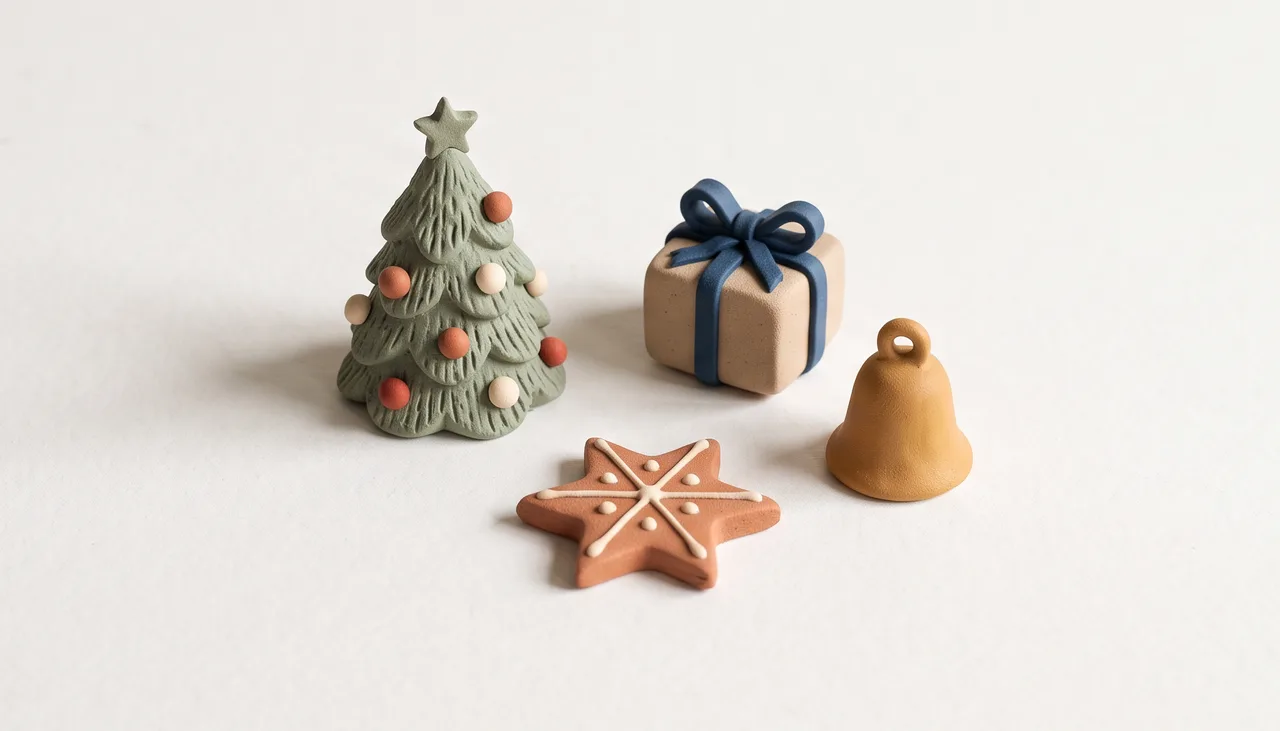
Cover illustration of the template “Christmas quiz: traditions around the world”
Question 1 of 20

Who wrote “A Christmas Carol”, the story of the miser Ebenezer Scrooge?

What you can leave with

A festive quiz ready in a minute that takes everyone on a trip around the world, with verified stories to share over Christmas dinner.

All questions in this template

Open a question to see its answer, explanation and source. You can adapt the wording and order in the editor.

  1. 1. Who wrote “A Christmas Carol”, the story of the miser Ebenezer Scrooge?
    • Oscar Wilde
    • Charles Dickens
    • Lewis Carroll
    • Arthur Conan Doyle

    Answer: Charles Dickens

    The book came out on 19 December 1843. All 6,000 copies of the first printing sold out by Christmas Eve.

    Source: Library of Congress

  2. 2. Christmas mistletoe grows on trees and takes water and minerals from them.

    Answer: True

    Its green leaves make some of its food, but its roots tap into the tree. It grows mostly on apple, lime and poplar trees.

    Source: Woodland Trust

  3. 3. How many arms does a star-shaped snowflake have?
    • 4
    • 5
    • 6
    • 8

    Answer: 6

    In ice, water molecules lock into a hexagonal pattern. The crystal forms a six-cornered prism, and an arm sprouts from each corner.

    Source: Caltech – SnowCrystals.com (Kenneth Libbrecht)

  4. 4. Who composed the music for “The Nutcracker”, the classic Christmas ballet?
    • Pyotr Tchaikovsky
    • Sergei Prokofiev
    • Igor Stravinsky
    • Sergei Rachmaninoff

    Answer: Pyotr Tchaikovsky

    It premiered in St Petersburg in 1892 to a lukewarm reception. The Sugar Plum Fairy’s dance features an instrument that was brand new then: the celesta.

    Source: Tchaikovsky Research

  5. 5. The bright red of a poinsettia comes from its petals.

    Answer: False

    Those “petals” are bracts, or modified leaves. The real flowers are the tiny yellow buds in the middle. The plant is native to Mexico and Guatemala.

    Source: University of Florida IFAS Extension

  6. 6. Saint Nicholas, whose legend inspired Santa Claus, was bishop of Myra. Which country is it in today?
    • Greece
    • Italy
    • Netherlands
    • Turkey

    Answer: Turkey

    Myra is today’s Demre, in southern Turkey. In 1087, Italian sailors carried his relics off to Bari, where they still rest.

    Source: National Geographic

  7. 7. In which present-day country was “Silent Night” first sung, in 1818?
    • Austria
    • Germany
    • Switzerland
    • Poland

    Answer: Austria

    Priest Joseph Mohr wrote the words and teacher Franz Xaver Gruber the melody. It was first heard on 24 December 1818 in Oberndorf.

    Source: SalzburgerLand Tourismus

  8. 8. Which country gives London the big Christmas tree in Trafalgar Square every year?
    • Sweden
    • Denmark
    • Norway
    • Finland

    Answer: Norway

    Oslo has sent it since 1947 to thank Britain for its support in the Second World War. It is usually a Norway spruce over 20 metres (65 ft) tall.

    Source: Mayor of London – London Assembly

  9. 9. In Poland, families often set an extra place at the Christmas Eve table for an unexpected guest.

    Answer: True

    The extra place stands for hospitality and for absent loved ones. This Christmas Eve supper has its own name: Wigilia.

    Source: University of Warsaw (Muzeum Polonii)

  10. 10. Who invented the Christmas cracker, the paper tube that goes bang, in 1840s London?
    • A watchmaker
    • A printer
    • A pharmacist
    • A confectioner

    Answer: A confectioner

    Tom Smith sold sugared almonds in paper twists, an idea from Paris. He tucked in a motto, then added the snap. His son Walter added the paper hats.

    Source: Victoria and Albert Museum

  11. 11. In Italy, who brings treats to children on the night of 5 to 6 January?
    • Krampus
    • Befana
    • Babbo Natale
    • Santa Lucia

    Answer: Befana

    This old woman fills the stockings hung by the fireplace: sweets for good children, coal for the naughty ones.

    Source: Italia.it

  12. 12. Which German city gives its name to a Christmas stollen protected by an EU label?
    • Dresden
    • Nuremberg
    • Cologne
    • Munich

    Answer: Dresden

    It has been protected since 2010. In 1730, about a hundred Dresden bakers made a giant 1.8-tonne stollen for Augustus the Strong.

    Source: European Commission – Geographical indications

  13. 13. In Sweden, on which day is Lucia celebrated, with her crown of candles?
    • 6 December
    • 13 December
    • 21 December
    • 24 December

    Answer: 13 December

    A white-clad Lucia leads a singing procession. People eat lussekatter, S-shaped saffron buns.

    Source: Nordiska museet

  14. 14. Rudolph the Red-Nosed Reindeer already appears in the 1823 poem “The Night Before Christmas”.

    Answer: False

    The poem names eight reindeer, not him. Copywriter Robert L. May created Rudolph in 1939 for a free booklet handed out in department stores.

    Source: Dartmouth College

  15. 15. In Mexico, how many evenings do the posadas, the festivities leading up to Christmas, last?
    • 3
    • 7
    • 9
    • 12

    Answer: 9

    Each night, people re-enact Mary and Joseph’s search for shelter, singing to ask for lodging. Then comes the party, piñata included!

    Source: UNAM – Revista de Literaturas Populares

  16. 16. Where does the Nordmann fir, a very common Christmas tree, grow in the wild?
    • Scandinavia
    • Alps
    • Rocky Mountains
    • Caucasus

    Answer: Caucasus

    It grows wild in the Caucasus and north-eastern Turkey. Its name honours the Finnish naturalist Alexander von Nordmann.

    Source: The Gymnosperm Database

  17. 17. The Advent wreath, invented in Hamburg in 1839, originally held just four candles.

    Answer: False

    For the children in his care, Johann Hinrich Wichern fixed one candle per day until Christmas to a wooden wheel: more than twenty!

    Source: evangelisch.de

  18. 18. In Iceland, how many mischievous brothers, the Yule Lads, come down from the mountains before Christmas?
    • 7
    • 9
    • 12
    • 13

    Answer: 13

    The first arrives on 12 December, the last on the 24th. Each night, children leave a shoe on the windowsill for a small treat.

    Source: Þjóðminjasafn Íslands (National Museum of Iceland)

  19. 19. In 1965, two astronauts played “Jingle Bells” in space on a harmonica and bells.

    Answer: True

    Aboard Gemini 6 on 16 December, Wally Schirra played the harmonica while Tom Stafford shook the bells. The instruments are now at the Smithsonian.

    Source: Smithsonian National Air and Space Museum

  20. 20. Since 1955, North America’s air defence command has “tracked” Santa every 24 December. It all began with…
    • A bet between officers
    • A child’s phone call
    • A letter to the president
    • A drawing contest

    Answer: A child’s phone call

    A child trying to call the “Santa” from a store ad misdialled and reached Colonel Harry Shoup. His team then added Santa’s sleigh to their tracking map.

    Source: Smithsonian National Air and Space Museum

10 more Christmas questions with answers

Read them aloud to keep the game going, or add them to the template. The answer follows each question.

Traditions and history

  • In which year did Henry Cole have the first commercial Christmas card printed? — Answer: in 1843, 1,000 copies sold for a shilling each.
  • On which day is Saint Nicholas celebrated? — Answer: 6 December, the date of his death according to tradition.
  • In the 15th century, why did Dresden bakers have to make stollen without butter? — Answer: butter was banned during Advent until a papal exemption in 1490.
  • In Iceland, who is the mother of the Yule Lads? — Answer: Grýla, a fearsome troll whose pet is a huge Yule Cat.

Carols, tales and poems

  • In how many languages and dialects is “Silent Night” sung today? — Answer: more than 300.
  • In the 1823 poem, what were the reindeer now known as Donner and Blitzen called? — Answer: Dunder and Blixem.
  • Who wrote the tale that inspired “The Nutcracker”? — Answer: the German author E.T.A. Hoffmann, in 1816, later adapted by Alexandre Dumas.

Nature and geography

  • Do female reindeer grow antlers? — Answer: yes. Reindeer are the only deer in which both sexes grow them.
  • Are most snowflakes perfectly symmetrical stars? — Answer: no, the vast majority of snow crystals are irregular.
  • Why is Christmas Island, in the Indian Ocean, called that? — Answer: an English captain sighted it on Christmas Day 1643. It has been Australian since 1958.

How to run this activity

  1. 1

    Pick your format

    Show the quiz on a big screen and play together, or choose the “Self-paced” mode so everyone plays at their own speed, with no timer.

  2. 2

    Start the session

    Open the template, adjust the timer if needed, then share the PIN or QR code. Players join from their browser, with no app to install.

  3. 3

    Vote, then share stories

    After each vote, the explanation appears. Pause for a few seconds: someone usually has a family tradition of their own to share.

  4. 4

    Finish on the podium

    Reveal the podium, then ask which tradition surprised people most. Add a few questions about your own family customs for a rematch.

Make this activity yours

Keep what fits, rewrite what does not and set the pace for your group.

Use this template

Templates are included in the free plan. Participation limits depend on your plan. See plans.