
Quiz / session

Space quiz: 20 questions with answers and explanations

How many sunrises do astronauts on the space station see in a single day? What color is a sunset on Mars? This space quiz brings together 20 questions on planets, moons, the Sun, stars and the great firsts of space exploration. Every answer is explained and checked against NASA, ESA and other trusted sources. Launch it for your group: everyone answers on their phone and the leaderboard updates live.

On a related topic: Solar system quiz: 15 questions on planets and stars

Time including discussion:
15–20 min
For:
Families, teachers, astronomy clubs, game nights and teams

English template · 20 questions · Updated on

Use this template

Make your own copy and edit it. Sign in or create an account to open it in the editor.

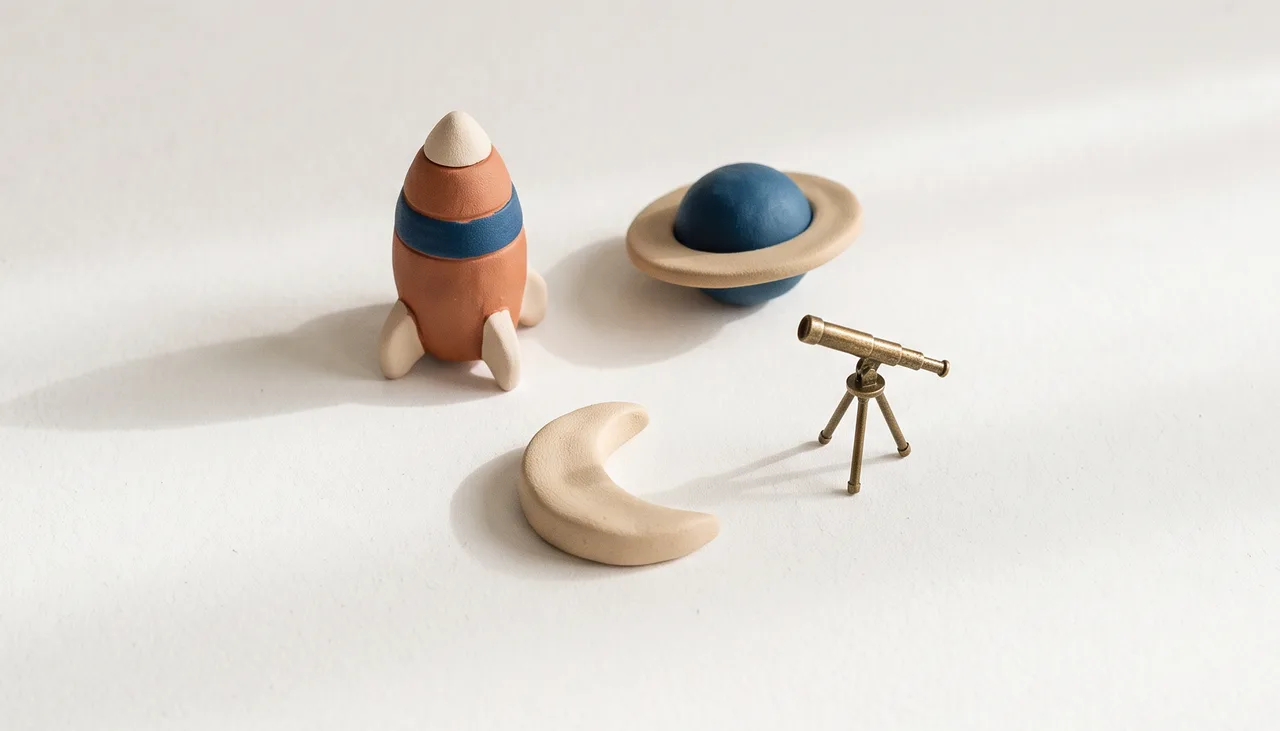
Cover illustration of the template “Space quiz: the solar system and the Universe”
Question 1 of 20

What is a shooting star, really?

What you can leave with

A quiz you can launch in a minute that takes the whole group on a trip through space, and leaves everyone with verified facts and sources.

All questions in this template

Open a question to see its answer, explanation and source. You can adapt the wording and order in the editor.

  1. 1. What is a shooting star, really?
    • A small star falling
    • A burning speck of dust
    • A passing planet
    • A far-off lightning bolt

    Answer: A burning speck of dust

    These bits of space debris heat up as they rush through the air. The Perseids, seen every August, enter it at about 59 km (37 miles) per second.

    Source: NASA Science, Meteors & Meteorites ; NASA Science, Perseids

  2. 2. About how long did the Apollo spacecraft take to get from Earth to the Moon?
    • About 3 hours
    • About 12 hours
    • About 1 day
    • About 3 days

    Answer: About 3 days

    Apollo 11 entered lunar orbit about 76 hours after launch. The Moon is 384,400 km (238,855 miles) away on average: 30 Earths would fit in between.

    Source: NASA, Apollo 11 Mission Overview ; NASA Science, Moon Facts

  3. 3. What causes the northern and southern lights?
    • Particles from the Sun
    • Light bouncing off ice
    • Light from the Moon
    • Lightning high in the sky

    Answer: Particles from the Sun

    Earth’s magnetic field funnels them toward the poles. When they hit the air, oxygen glows green or red, and nitrogen blue or purple.

    Source: NASA Space Place, What is an aurora?

  4. 4. What is Jupiter’s Great Red Spot?
    • An erupting volcano
    • An impact crater
    • A giant storm
    • A sea of lava

    Answer: A giant storm

    It could hold just over one Earth. First confirmed in 1831 and measured every year since 1878, it is slowly shrinking.

    Source: NASA Science (Hubble), Jupiter’s Great Red Spot getting taller as it shrinks

  5. 5. Very dark sunglasses are enough to watch a partial solar eclipse safely.

    Answer: False

    However dark they are, they let far too much light into your eyes. You need eclipse glasses that meet the ISO 12312-2 standard.

    Source: NASA Science, Eclipse Safety

  6. 6. Which of these stars has the hottest surface?
    • A red star
    • A yellow star
    • A blue star
    • An orange star

    Answer: A blue star

    A blue star can top 20,000 °C at its surface, while a red one stays below 3,500 °C. Our yellow Sun is around 5,500 °C (10,000 °F).

    Source: OpenStax Astronomy 2e (Rice University), 17.2 Colors of Stars

  7. 7. What is the largest moon in the solar system?
    • Ganymede
    • Titan
    • Callisto
    • Io

    Answer: Ganymede

    It is even bigger than the planet Mercury, and it is the only moon known to have its own magnetic field.

    Source: NASA Science, Ganymede

  8. 8. In 2014, ESA’s Philae lander achieved a historic first. Where did it land?
    • On an asteroid
    • On the planet Mars
    • On a moon of Jupiter
    • On a comet

    Answer: On a comet

    It touched down on comet 67P on 12 November 2014, after a journey that began in 2004 aboard ESA’s Rosetta spacecraft.

    Source: ESA, Touchdown! Rosetta’s Philae probe lands on comet

  9. 9. What makes stars twinkle when seen from the ground?
    • Their fast spin
    • Earth’s atmosphere
    • Passing satellites
    • Their speed through space

    Answer: Earth’s atmosphere

    Their light passes through layers of air at different temperatures, which keep bending it. Seen from space, stars do not twinkle.

    Source: Hong Kong Observatory, Why do stars twinkle?

  10. 10. Which planet appears to spin on its side?
    • Neptune
    • Saturn
    • Mars
    • Uranus

    Answer: Uranus

    Its axis is tilted about 98°. When one pole faces the Sun, the other half of the planet goes through a dark winter lasting about 21 years.

    Source: NASA Science, Uranus Facts

  11. 11. About how many sunrises does the International Space Station crew see in 24 hours?
    • 1
    • 4
    • 10
    • 16

    Answer: 16

    The station circles Earth about every 90 minutes at 8 km (5 miles) per second. People have lived aboard without a break since November 2000.

    Source: NASA, Space Station Facts and Figures

  12. 12. The Sun and the Moon look the same size. In reality, how many times wider is the Sun?
    • About 4 times
    • About 40 times
    • About 400 times
    • About 4,000 times

    Answer: About 400 times

    But it is also about 400 times farther away. That coincidence lets the Moon cover it almost exactly during a total eclipse.

    Source: NASA Space Place, How is the Sun completely blocked in an eclipse?

  13. 13. A helicopter has already flown on Mars.

    Answer: True

    On 19 April 2021, the 1.8 kg (4 lb) Ingenuity made the first powered flight on another planet. Built for 5 flights, it managed 72.

    Source: NASA Science, Ingenuity Mars Helicopter

  14. 14. Which moon has lakes and seas of liquid methane?
    • Titan
    • Europa
    • Triton
    • Enceladus

    Answer: Titan

    Apart from Earth, it is the only world known to have liquids on its surface. Europe’s Huygens probe landed there in 2005.

    Source: NASA Science, Titan

  15. 15. Between 1969 and 1972, how many astronauts walked on the Moon?
    • 2
    • 12
    • 18
    • 24

    Answer: 12

    They flew on six Apollo missions. In April 2026, the Artemis II crew flew around the Moon without landing.

    Source: NASA Science, Moon Walkers

  16. 16. In which year was the very first image of a black hole revealed?
    • 1999
    • 2009
    • 2019
    • 2024

    Answer: 2019

    Eight linked radio telescopes worked as one virtual telescope the size of Earth. In 2022, the team unveiled an image of the one at the heart of our galaxy.

    Source: ESO, Astronomers capture first image of a black hole (eso1907)

  17. 17. How many official constellations does the International Astronomical Union recognize?
    • 12
    • 48
    • 88
    • 110

    Answer: 88

    The list dates from 1922. Astronomer Eugène Delporte then drew their borders, so every point in the sky belongs to exactly one.

    Source: IAU, Constellations (Astronomy FAQs)

  18. 18. How far does the Moon drift away from Earth each year?
    • About 4 mm
    • About 4 cm
    • About 4 m
    • About 4 km

    Answer: About 4 cm

    Scientists measure it by bouncing lasers off reflectors left by Apollo astronauts: about 3.8 cm (1.5 in) a year.

    Source: NASA JPL, The Apollo Experiment That Keeps On Giving

  19. 19. Billions of years from now, what will the Sun turn into?
    • A red giant
    • A black hole
    • A neutron star
    • A supernova

    Answer: A red giant

    It will swell up and may even swallow Earth. To become a black hole, it would need about 20 times more mass.

    Source: NASA, Why the Sun Won’t Become a Black Hole

  20. 20. On Mars, what color does the sky turn around the setting Sun?
    • Red
    • Orange
    • Green
    • Blue

    Answer: Blue

    Fine Martian dust lets blue light through and keeps it close to the Sun’s direction. NASA’s Curiosity rover photographed a blue sunset in 2015.

    Source: NASA Science (Photojournal PIA19400), Sunset in Mars’ Gale Crater

10 more space questions

Read them aloud to keep the game going, or add them to the template. The answer follows each question.

Planets and moons

  • Which planet has the shortest day? — Answer: Jupiter, which spins once in less than 10 hours.
  • What shape do the clouds form at Saturn’s north pole? — Answer: a hexagon, a six-sided jet stream more than twice as wide as Earth.
  • How many moons orbit Mars? — Answer: two, Phobos and Deimos, discovered in 1877.

Space exploration

  • What was the first space station? — Answer: Salyut 1, launched by the USSR on 19 April 1971.
  • Who made the first spacewalk? — Answer: Alexei Leonov, on 18 March 1965, during the Voskhod 2 mission.
  • Which spacecraft was the first to fly past Pluto, in 2015? — Answer: New Horizons, launched by NASA in 2006.
  • Which human-made object was the first to reach interstellar space? — Answer: the Voyager 1 probe, in August 2012, almost 35 years after launch.

Sky and light

  • How often does Halley’s Comet come back? — Answer: about every 76 years; its next visit is in 2061.
  • Why is the sky blue during the day? — Answer: air scatters the Sun’s blue light, made of shorter waves, more than other colors.
  • Why does the Moon turn red during a total lunar eclipse? — Answer: only reddish light, filtered through Earth’s atmosphere, still reaches it.

How to run this activity

  1. 1

    Pick your format

    Play out loud, no phones needed: read each question and let the group answer. Or import the template: everyone answers on their phone and Pomlet keeps score.

  2. 2

    Start the session

    Open the template, adjust the timer if needed, then share the PIN or QR code. Players join from their browser, with no app to install.

  3. 3

    Vote, then explain

    After each vote, the explanation appears. Take a few seconds to discuss it: the questions about Mars and the Moon usually get people talking.

  4. 4

    Finish on the podium

    Reveal the podium, then ask which answer surprised people most. Keep the ten questions below for a rematch.

Make this activity yours

Keep what fits, rewrite what does not and set the pace for your group.

Use this template

Templates are included in the free plan. Participation limits depend on your plan. See plans.